Home / Travel Insurance / Articles / Does Travel Insurance Cover Medical Expenses Abroad?
Does Travel Insurance Cover Medical Expenses Abroad?
Shreya SahuMay 20, 2026
Share Post
Yes, travel insurance policies cover different medical expenses when you are in a foreign country, which includes sudden illness and accidental injuries. From sudden stomach infections to a broken ankle on a sightseeing tour, your travel insurance plan is designed for softening the blow for expensive overseas healthcare.
Policies usually include emergency treatment, hospital stays, ambulance services, and medical evacuation back to India if needed. With healthcare costs in many countries soaring high, this cover prevents you from draining your entire bank balance. Keep reading to understand inclusions, limits, and what to watch out for before you start your international journey.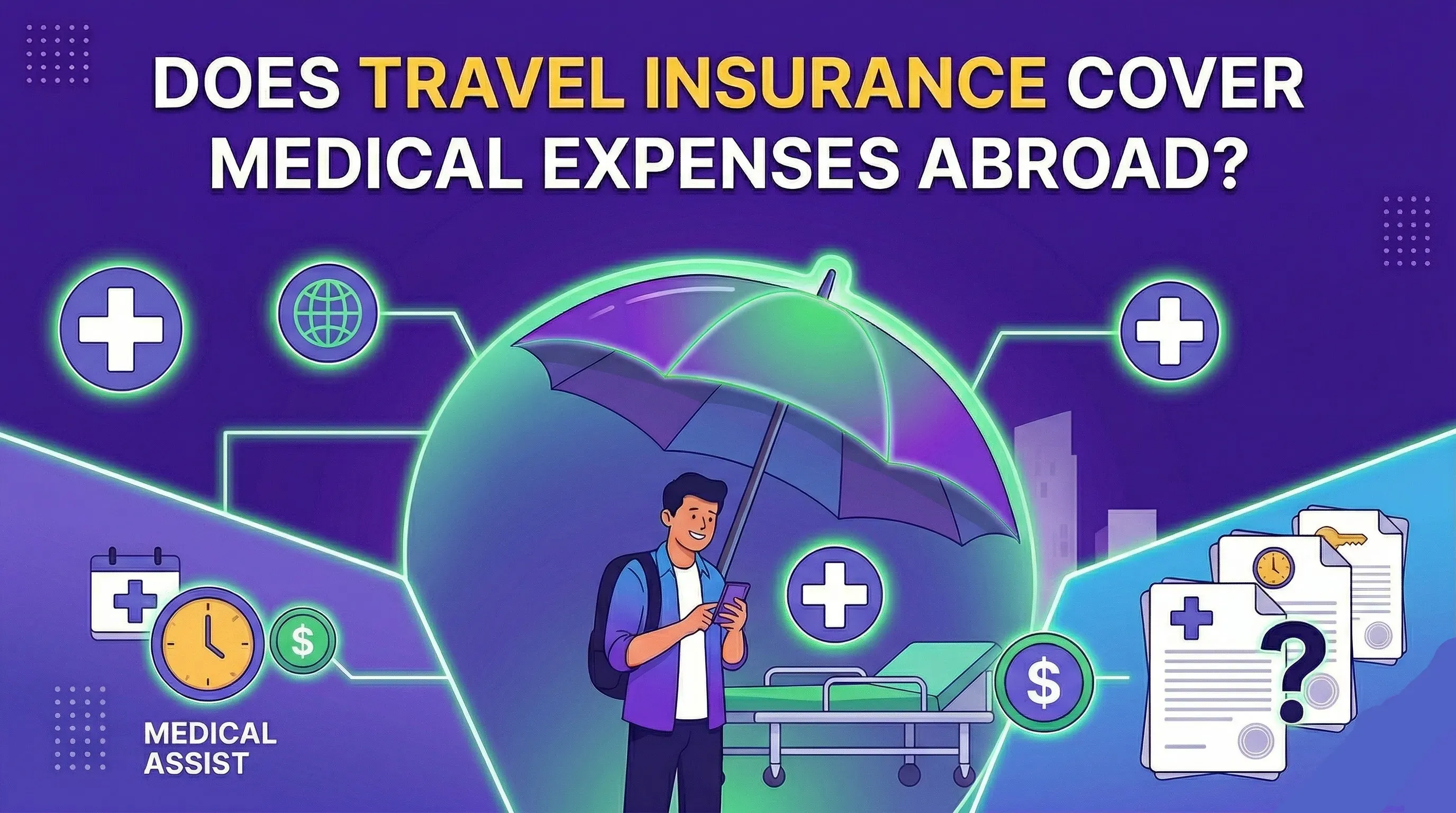
Contents

- Why Medical Coverage While Travelling Matters?
- Types of Medical Expenses Covered by Travel Insurance
- Cashless vs. Reimbursement Claims
- What’s Not Covered Under Medical Expenses?
- Health Insurance vs. Comprehensive Travel Insurance
- How to Avail Medical Assistance Abroad?
- Conclusion
- Frequently Asked Questions
Why Medical Coverage While Travelling Matters?
Healthcare costs can vary drastically across countries. In some destinations, even a short hospital stay can cost thousands of dollars. A minor accident or food poisoning episode can turn into a major financial setback if you’re uninsured.
Travel insurance with medical cover ensures you can access treatment without delay and without draining your savings. It also saves your family from the stress of arranging funds in an emergency.
Types of Medical Expenses Covered by Travel Insurance
Here’s what’s usually covered under the medical section of an international travel insurance policy:
Emergency hospitalisation: Covers costs if you need to be admitted to a hospital due to illness or injury, including room charges, doctor’s fees, medicines, and diagnostic tests.
Outpatient treatment: For minor health issues that don’t require hospitalisation, such as a fever, cold, or minor injuries, your insurer may reimburse doctor consultations, prescribed medicines, and basic investigations.
Emergency medical evacuation: If specialised treatment isn’t available locally, your policy can cover transport to the nearest suitable hospital or even back to your home country.
Repatriation of remains: In the unfortunate event of death abroad, travel insurance covers the cost of bringing your body back home.
Dental emergencies: Some plans cover acute dental pain or accidental dental injuries that need immediate attention.
Daily cash allowance: Some policies give you a small daily cash amount to help with personal expenses while you’re in the hospital.
Cashless vs. Reimbursement Claims
When you need medical help abroad, there are two main ways your insurance company will handle the payments:
Cashless Claim
If you’re treated at a hospital that’s part of your insurer’s international network, the insurer directly settles the bills with the hospital. You only need to contact the insurer or their assistance partner and present your policy details. This is the most convenient option since you don’t have to pay up front.
Reimbursement Claims
If you receive treatment at a non-network hospital, you’ll need to pay the expenses initially. Later, you can submit all the medical bills, prescriptions, and supporting documents to your insurer. Once verified, the eligible amount is reimbursed to your account.
Read More: Cashless vs Reimbursement Claims in Travel Insurance
What’s Not Covered Under Medical Expenses?
Travel insurance provides protection, but it doesn’t always cover everything. Here are some common exclusions or things that are not covered:
Pre-existing medical conditions, unless they are specifically mentioned in the policy.
Cosmetic surgeries or elective treatments that are not medically necessary.
Pregnancy-related complications (unless it is mentioned in the policy).
Self-inflicted injuries, drug, or alcohol-related incidents.
Adventure sports injuries are not covered unless the policy includes an add-on for adventure activities.
Routine check-ups or ongoing treatments for chronic illnesses.
Read More: What are the Exclusions in Travel Insurance?
Health Insurance vs. Comprehensive Travel Insurance
Not all insurance plans are created equal, especially when you travel. Here’s a quick comparison between your regular health insurance and travel insurance to show why the latter is designed specifically for trips abroad:
Feature | Health Insurance | Travel Insurance |
|---|---|---|
Coverage area | Primarily limited to your home country | Worldwide, for the duration of your trip |
Focus | Long-term medical care and ongoing treatments | Short-term emergencies and travel-related issues |
Medical emergencies | Usually not covered, or difficult to claim | Covered, including hospitalisation, doctor visits, and evacuation |
Other travel risks | Not included | Covers trip cancellations, lost or delayed baggage, flight delays, and more |
Claim process abroad | Can be complex and slow | Simplified, often with 24/7 assistance and cashless options |
Ideal for | Residents seeking ongoing healthcare coverage | Anyone travelling internationally for leisure, business, or study |
How to Avail Medical Assistance Abroad?
If you face a medical emergency during your trip, here’s what you should do:
Contact the insurance company immediately. Most policies offer 24/7 international helplines. Inform them about your situation and location.
Share your policy details. This will help the insurance company check and verify coverage and, if available, guide you to a nearby network hospital.
Follow the insurer’s instructions. They’ll assist with documentation, approvals, and payment coordination.
Keep all medical documents and bills. These are essential for reimbursement claims later.
Conclusion
Medical emergencies can happen anytime, anywhere, even during a long-awaited vacation or an important business trip. Having travel insurance with comprehensive medical coverage gives you the assurance that you’re protected from unexpected expenses, giving you peace of mind wherever you go.
Frequently Asked Questions
Will my travel insurance cover minor treatments like a cold or fever?

Yes. You can see a local doctor or visit a clinic for treatment, and your insurer will usually reimburse the consultation and medicine costs. Just make sure to keep all the bills and prescriptions, as you will need to show them as proof.
Is skydiving covered by travel health insurance?
No. Injuries from high-risk activities like skiing, scuba diving, or trekking are usually not included unless your plan has an add-on for adventure sports coverage.
Is it okay to not get travel insurance?
Having travel insurance is ideal in case you face situations that require medical attention. Hence, it is advised to get travel insurance even if it's just as a safety precaution.
Does travel health insurance cover COVID-19?
Yes, travel health insurance covers COVID-19.
Does Travel Insurance Cover Medical Expenses Abroad?
Whether it is a planned treatment, an emergency, or an accident, health insurance with global coverage will cover medical expenses incurred during hospitalisation or while receiving treatment abroad.
Disclaimer: The content on this page is generic and shared only for informational and explanatory purposes. It is based on several secondary sources on the internet, and is subject to changes. Please check the policy document for cancellation reasons, and terms and conditions of the policy.
Travel Insurance for Popular Destinations

Was this article helpful?

Recent
Articles
No Insurance, No Fuel: What the Supreme Court's Pilot Means
Nikhila PS Aug 6, 2026
Supreme Court Extends Third-Party Insurance for New Cars to Four Years
Nikhila PS Aug 6, 2026
Do ADAS Features Reduce Car Insurance Premiums in India?
Nikhila PS Jun 25, 2026
How Do BS6 Bikes Affect Bike Insurance Premiums and Coverage?
Nikhila PS Jun 25, 2026
Top 15 Car Companies in India in 2026
Nikhila PS Jun 25, 2026
All Articles


Want to post any comments?

Ensure a safe trip with a comprehensive travel insurance plan.
Travel insurance plans starting @ ₹45*/per day

Get Quote


#36/5, Hustlehub One East, Somasandrapalya 27th Main Rd, Sector 2, HSR Layout, Bengaluru, Karnataka 560102