Travel Insurance Benefits Offered by Credit Cards
Team AckoMay 20, 2026
Share Post
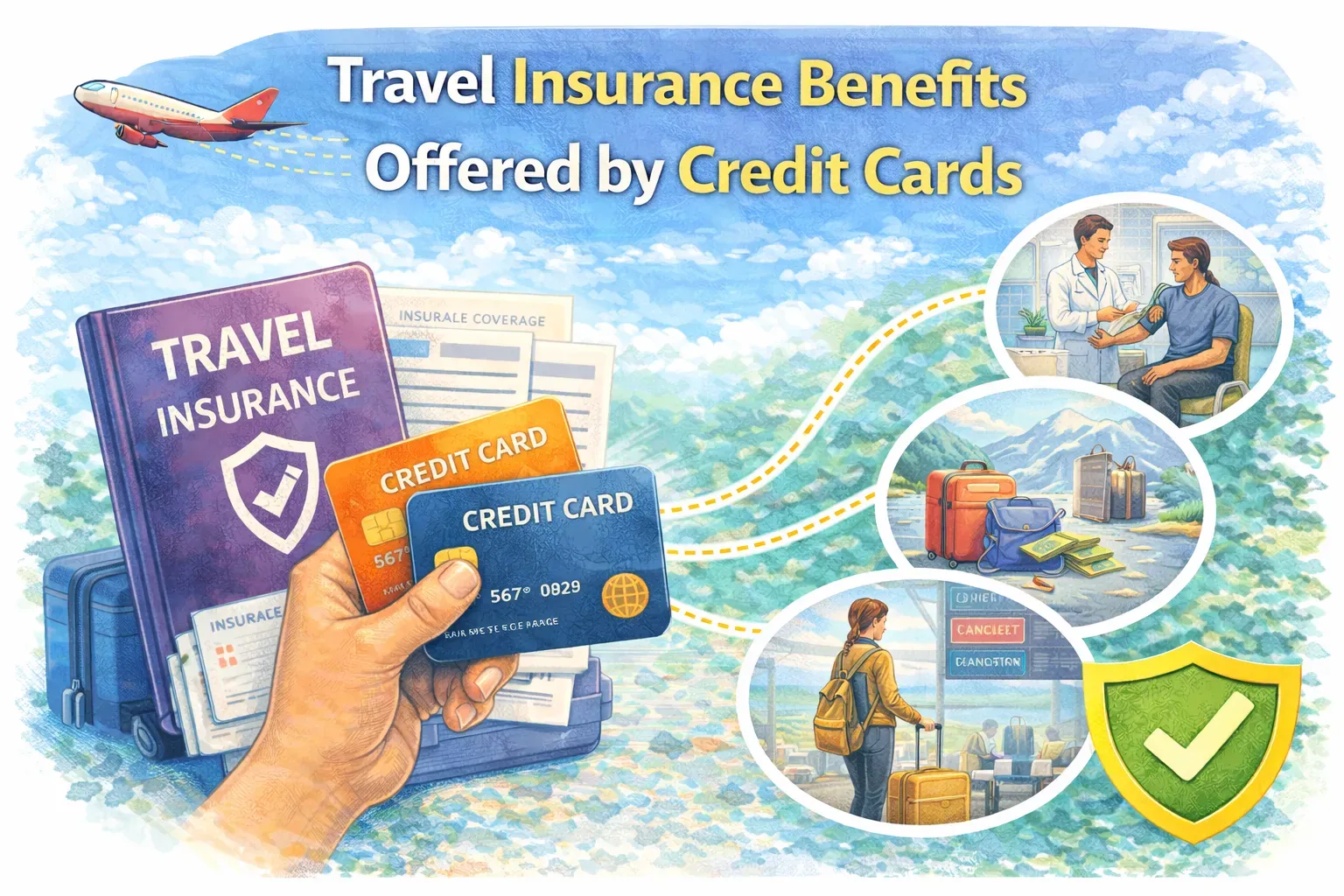
Credit cards offer travel insurance benefits that can protect you during trips booked using your card. The travel insurance benefits offered by credit cards act as a convenient backup for common travel mishaps.
From flight delays and trip cancellations to lost baggage and emergency medical expenses, many credit cards include complimentary coverage for cardholders. This feature is especially appealing for frequent travellers who want quick protection without buying a separate policy.
However, while these benefits add value, they are usually limited in scope and coverage amounts. Understanding what your card actually covers, and where it falls short, helps you travel smarter and decide whether additional insurance is necessary.
Contents

- What is A Credit Card Travel Insurance Policy?
- What Are The Best Credit Card Travel Insurance Benefits?
- What Are The Limitations of A Credit Card Travel Insurance Policy?
- Why Is Standalone Travel Insurance A Better Choice?
- When Can Credit Card Travel Insurance Be Useful?
- Final Words
- Frequently Asked Questions
What is A Credit Card Travel Insurance Policy?
Various travel-based credit cards feature built-in travel insurance. For many cards, it is complimentary; some may charge a nominal verification fee. In most cases, the credit card travel insurance benefits in India activate once cardholders make their travel bookings using the card.
What Are The Best Credit Card Travel Insurance Benefits?
The credit card travel insurance coverage offers different advantages, including emergency medical coverage, trip cancellation, emergency evacuation, etc. Here are the details:
1. Emergency Medical Coverage
Most travel credit cards include emergency medical insurance for unexpected accidental or other medical emergencies. It covers hospital stays, medications, ambulance charges, etc.
2. Trip Cancellation and Interruption Benefits
Some credit cards reimburse non-refundable costs if the trip was cut short or cancelled due to specific reasons, including medical instability or natural disasters.
3. Baggage Loss and Delay Protection
Certain credit cards offer compensation for lost baggage. However, the insurance only covers the expenses of essential items like toiletries and clothing.
4. Flight Delay and Missed Connection
If your flight is late, credit cards provide compensation for meals or accommodation. However, delays due to weather or airline strikes are often excluded from the credit card travel insurance policy.
5. Accidental Death Cover
Many cards include accidental death benefits in addition to repatriation of mortal remains. However, the cardholder must purchase the ticket with the credit card and process the claim within 90 days of the incident.
At first glance, all these benefits may sound convenient and cost-effective. However, most of the credit cards have a long list of terms and conditions to be eligible for these benefits, which most cardholders tend to ignore.
What Are The Limitations of A Credit Card Travel Insurance Policy?
Most credit card travel insurance benefits exclude pre-existing conditions. And that’s not all. The limitations also include:
1. Conditional Coverage
The above-mentioned benefits only apply if you plan the entire trip, starting from flight bookings to hotel reservations, using only the particular credit card. Partial payments, reward redemptions and third-party bookings often contradict the coverage.
2. Low Coverage Limit
Medical treatment in a foreign land can incur high healthcare costs. A credit card travel insurance coverage fails to cover these entirely, causing excessive out-of-pocket expenses.
3. Fine Print and Exclusions
Credit card travel insurance policies come with country-specific exclusions, strict age restrictions and activity restrictions, like adventure sports. Although these exclusions hide under lengthy fine print.
4. Complicated and Slow Claim Process
Third-party insurers operate most credit card travel plans. Thus, the process to claim the coverage is complex and time-consuming. Since the customer service of credit card insurance is not insurance-focused, real-time assistance in case of emergencies is unavailable. Also, the claims require extensive documentation, which makes it more difficult to process.
Why Is Standalone Travel Insurance A Better Choice?
While credit card travel insurance may work as a secondary backup, standalone travel insurance policies from reputed providers like ACKO should be prioritised as they are exclusively designed for travellers. Take a look at the key benefits:
1. Comprehensive Medical Coverage:
Standalone international travel insurance plans offer high medical coverage to meet the global medical costs. Also, travel insurance from top insurers like ACKO covers emergency development of pre-existing conditions if you mention them at the time of policy initiation.
2. Customisable Plans:
Unlike credit cards, standalone travel insurance policies are customisable. You can tailor the plans as per the frequency of your trip, destination, duration, age, etc. You can also include add-ons like adventure sports cover or personal liability cover to meet your coverage needs precisely.
3. Clear Inclusions and Transparent Policy Terms:
Standalone insurers clearly define the inclusions and exclusions of the travel policy to help you understand better. The dedicated and transparent policy documents save you from unwanted surprises during claims.
4. Fast and Easy Claim Process:
Since most standalone travel insurers are digital-first, they offer a hassle-free virtual claims process with round-the-clock emergency support and 24-hour claim settlement commitment. This can make a significant difference when you are facing a medical emergency abroad.
5. Coverage Beyond Booking:
Whether your trip is booked through multiple platforms or changed at the last minute, a standalone travel insurance protects your entire journey, not just expenses linked to a specific credit card transaction.
When Can Credit Card Travel Insurance Be Useful?
Credit card travel insurance can still be helpful:
For short domestic or nearby international trips
As a secondary or backup cover
For travellers with minimal risk exposure.
However, one must not rely on it as primary protection, especially for international travel.
Final Words
Travel insurance offered by credit cards is often marketed as a ‘complimentary’ benefit, but it is important to understand that free does not always mean sufficient. While there are certain credit card travel insurance benefits, the limitations can leave travellers financially exposed when they need support the most.
A standalone travel insurance policy ensures that your journey from start to finish. For travellers who want reliable and strong coverage, standalone travel insurance is a must-have.
Frequently Asked Questions
Is it worth paying extra for travel insurance when I have credit card travel insurance?

Credit card travel plans are limited, non-customisable and time-consuming. If you are willing to protect your finances in future, it is good to invest in travel insurance. Plus, all good travel insurance is not that expensive. You can opt for ACKO travel insurance for only ₹45* per day.
Do credit cards give free travel insurance?
No. Though they market it as a complementary benefit, you have to pay a lump sum annual fee to be eligible for this benefit. Thus, technically, it is not free.
What is not covered by both credit card and standalone travel insurance?
Losses due to illegal behaviour and reckless activity, acts of war, nuclear incidents and terrorism are excluded from both the credit card travel insurance and standalone travel plans.
Why is standalone travel insurance more reliable than credit card travel insurance?
Standalone travel insurance offers comprehensive coverage, higher limits, and fewer conditions, ensuring protection even when bookings are made across multiple platforms or changed later.
How does medical coverage differ between standalone and credit card travel insurance?
Standalone travel insurance provides significantly higher medical coverage, including emergency treatment and hospitalisation, while credit card travel insurance usually offers low, restrictive limits.
Why should frequent travellers choose standalone travel insurance over credit card coverage?
Frequent travellers benefit from customisable plans, trip-duration flexibility, and consistent coverage, which credit card travel insurance cannot provide due to rigid eligibility conditions.
Disclaimer: The content on this page is generic and shared only for informational and explanatory purposes. It is based on several secondary sources on the internet, and is subject to changes.

Was this article helpful?

Recent
Articles
No Insurance, No Fuel: What the Supreme Court's Pilot Means
Nikhila PS Aug 6, 2026
Supreme Court Extends Third-Party Insurance for New Cars to Four Years
Nikhila PS Aug 6, 2026
Do ADAS Features Reduce Car Insurance Premiums in India?
Nikhila PS Jun 25, 2026
How Do BS6 Bikes Affect Bike Insurance Premiums and Coverage?
Nikhila PS Jun 25, 2026
Top 15 Car Companies in India in 2026
Nikhila PS Jun 25, 2026
All Articles


Want to post any comments?

Ensure a safe trip with a comprehensive travel insurance plan.
Tell us a bit about your upcoming journey.

Get Quote


#36/5, Hustlehub One East, Somasandrapalya 27th Main Rd, Sector 2, HSR Layout, Bengaluru, Karnataka 560102