Home / Travel Insurance / Articles / Multi-Trip vs Single-Trip Travel Insurance in India: What’s Best for You?
Multi-Trip vs Single-Trip Travel Insurance in India: What’s Best for You?
Team AckoMar 30, 2026
Share Post
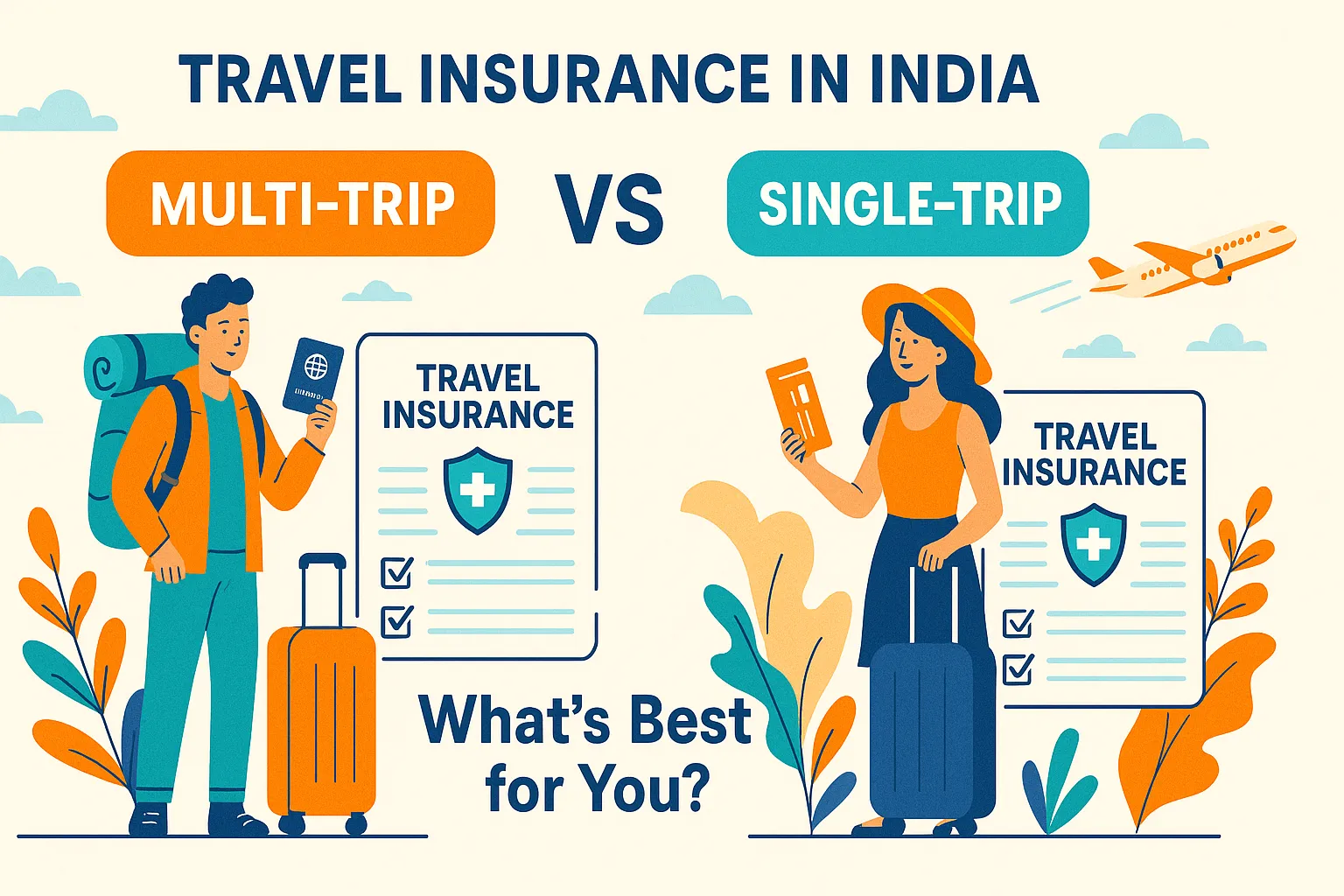
Multi-trip or single-trip insurance depends on your travel frequency. It also depends on the type of trips you usually plan. If you travel only once a year, a single-trip insurance policy is for you. In contrast, multi-trip insurance suits frequent travellers. Choosing the right type of travel insurance allows you to save both time and money while ensuring that you are covered on every trip. So, read on to know more about multi-trip vs single-trip travel insurance.
Contents

What is Single-Trip Travel Insurance?
Single-trip travel insurance offers coverage for only a single specific journey. Your journey begins from the day you leave India and ends once you return. This policy is beneficial for Indians who prefer to take international trips occasionally.
Benefits of Single-Trip Insurance
The key benefits of single-trip travel insurance are:
Cost-Effective: Single-trip insurance offers protection without unnecessary costs.
Flexibility: Covers trips of different durations, from short getaways to long vacations.
Targeted Protection: Protects you against trip cancellations, baggage loss, medical-related emergencies, and travel delays.
What’s covered in the Single-Trip Policy?
The key inclusions in a single-trip policy are:
Medical emergencies overseas
Flight cancellations or delays
Trip interruption or cancellation
Loss of a passport or baggage
Emergency medical evacuation or repatriation
Personal liability (if you unintentionally damage or hurt someone)
Emergency cash assistance or document support
Who Can Choose Single-Trip Insurance?
A single trip insurance is beneficial for travellers looking for coverage for a single journey rather than multiple trips around the year. Let’s find out more in detail:
Travellers who go on a single trip within a year.
Individuals with budget constraints who need coverage for a specific trip.
Infrequent travellers with a preference for a one-time purchase of a policy.
What is Multi-Trip Insurance?
Multi-trip travel insurance includes multiple trips within a year. Ideal for frequent travellers, this travel insurance covers each trip you take, ensuring comprehensive coverage with convenience. Instead of buying a policy for each trip, it covers multiple trips within 12 months.
Benefits of Multi-Trip Insurance
Here are the key benefits of a multi-trip insurance policy:
Convenience: You do not need to buy separate policies for each trip. This makes it convenient and hassle-free for frequent travellers.
Global Support: Offers 24/7 support globally, ensuring help whenever required.
Continued Protection: Offers peace of mind by ensuring continuous coverage for trip disruptions, baggage loss, and medical emergencies.
What’s covered in the Multi-Trip Policy?
The key inclusions in the multi-trip policy are:
Annual coverage (12 months) for multiple trips during the policy period
Multiple short trips allowed, usually up to 90 or 180 days per trip, depending on the policy
Emergency medical expenses and hospitalisation abroad
Trip cancellation, interruption, or delay coverage
Loss, delay, or damage of checked baggage and passport assistance
Emergency evacuation or repatriation benefits
Who Can Choose Multi-Trip Insurance?
Let’s see who is eligible to opt for multi-trip insurance:
Business travellers who frequently take international trips.
Adventurers who go on multiple vacations year-round.
Individuals looking for comprehensive coverage during unforeseen circumstances.
Differences Between Single-Trip and Multi-Trip Insurance
The key distinctions between single-trip and multi-trip insurance are summarised in the table below.
| Feature | Single-Trip Insurance | Multi-Trip Insurance |
|---|---|---|
| Coverage Duration | One journey only | Multiple trips within a year |
| Best For | Occasional travellers | Frequent travellers |
| Premium | Paid per trip, cheaper for one-off travel | Higher upfront, but it is cost-effective for multiple trips |
| Flexibility | Limited to one trip | Covers several trips without re-purchasing |
| Convenience | Need to buy fresh each time | One-time purchase for the whole year |
| Cancellation Cover | Only for that specific journey | Covers cancellations for any trip within the year |
Multi-Trip or Single-Trip Insurance: Which One to Choose?
Whether to choose between single trip vs. multi trip insurance depends on how frequently and how long you are travelling within a year:
How many vacation trips are you planning in a year?
If you are travelling once or twice a year, a single-trip insurance is ideal. However, if you are travelling frequently, go for multi-trip insurance. It covers several trips under a single plan.
For how long will you stay on the trip?
Opt for single-trip plans if you have plans for long vacations. During a single-trip plan, you can stay at a definite destination for several days or weeks. In contrast, multi-trip plans usually limit each trip to 30–90 days.
What is the cost of your chosen plan?
Single-trip plans are comparatively cheaper for occasional travellers. Multi-trip plans, on the other hand, are expensive but cost-effective if you are travelling frequently within a year.
Key Things to Consider Before Buying Single or Multi-Trip Travel Insurance
Before you finalise buying single or multi-trip travel insurance, consider the following factors:
Travel Style: Assess your travel style before choosing a policy. If you choose luxury or adventure travel, make sure your chosen policy offers the necessary coverage.
Coverage Limit: Be aware of the maximum coverage limits for medical expenses, trip cancellations, baggage loss, and other coverages.
Duration of Trip: Review your trip's maximum length and the limitations on trip durations.
Policy Wording: Go through the terms and conditions of your chosen policy to understand the detailed coverage and claim process. For instance, ACKO offers a relatively quick and hassle-free claims process.
Additional Considerations:
Here are the key additional factors to consider before buying a single vs. multi-trip travel insurance policy:
Budget: A single trip plan is cheaper. However, if you are a frequent traveller, multi-trip insurance is beneficial.
Trip Cover: A single-trip plan usually covers long journeys, whereas multi-trip plans impose limitations on trip length and coverage.
Final Words
If you are confused between choosing single-trip vs. multi-trip insurance in India, consider your travel needs, frequency, and budget. For occasional travellers, single-trip insurance is ideal; for regular travellers, multi-trip insurance is ideal.
Both these insurance plans have their own benefits and limitations. Review your travel habits and decide which policy to choose. ACKO offers plans designed for both single and multiple trips. These can help ensure a smoother and more secure travel experience. So, make sure to select the right coverage before beginning your journey.
Is multi-trip travel insurance more affordable than purchasing several single-trip policies?

Yes, if you're travelling often. Paying up front for an annual plan is sometimes cheaper than buying individual single-trip policies.
Can I insure more than one country on a single-trip policy?
Yes. Most single-trip policies allow travel to more than one country, but you need to name your destinations when you purchase the policy.
What is the longest duration of one trip under a multi-trip plan?
Most insurance companies limit each trip to 90 or 180 days. Extended trips might require single-trip insurance.
Is travel insurance compulsory for all countries?
Not all, but some European destinations (Schengen nations) have it as a requirement for visa approval. Even where it is not obligatory, it is highly recommended.
Can multi-trip insurance be purchased by senior citizens?
Yes, but insurance companies might have an upper age limit and may request a health check-up prior to approval.
Does travel insurance pay for trip cancellations in case of illness?
Yes, depending on policy conditions, single-trip and multi-trip policies typically cover medical or emergency-related cancellations.
Disclaimer: The content on this page is generic and shared only for informational and explanatory purposes. It is based on several secondary sources on the internet, and is subject to changes. Please check the policy document for cancellation reasons, and terms and conditions of the policy.
Travel Insurance for Popular Destinations

Was this article helpful?

Recent
Articles
No Insurance, No Fuel: What the Supreme Court's Pilot Means
Nikhila PS Aug 6, 2026
Supreme Court Extends Third-Party Insurance for New Cars to Four Years
Nikhila PS Aug 6, 2026
Do ADAS Features Reduce Car Insurance Premiums in India?
Nikhila PS Jun 25, 2026
How Do BS6 Bikes Affect Bike Insurance Premiums and Coverage?
Nikhila PS Jun 25, 2026
Top 15 Car Companies in India in 2026
Nikhila PS Jun 25, 2026
All Articles


Want to post any comments?

Ensure a safe trip with a comprehensive travel insurance plan.
Travel insurance plans starting @ ₹45*/per day

Get Quote


#36/5, Hustlehub One East, Somasandrapalya 27th Main Rd, Sector 2, HSR Layout, Bengaluru, Karnataka 560102