


speak for ACKO
speak for ACKO
speak for ACKO
Home / Travel Insurance / Articles / Travel Tips / What Are the Exclusions in Travel Insurance?
What Are the Exclusions in Travel Insurance?
Team AckoDec 30, 2025
Share Post
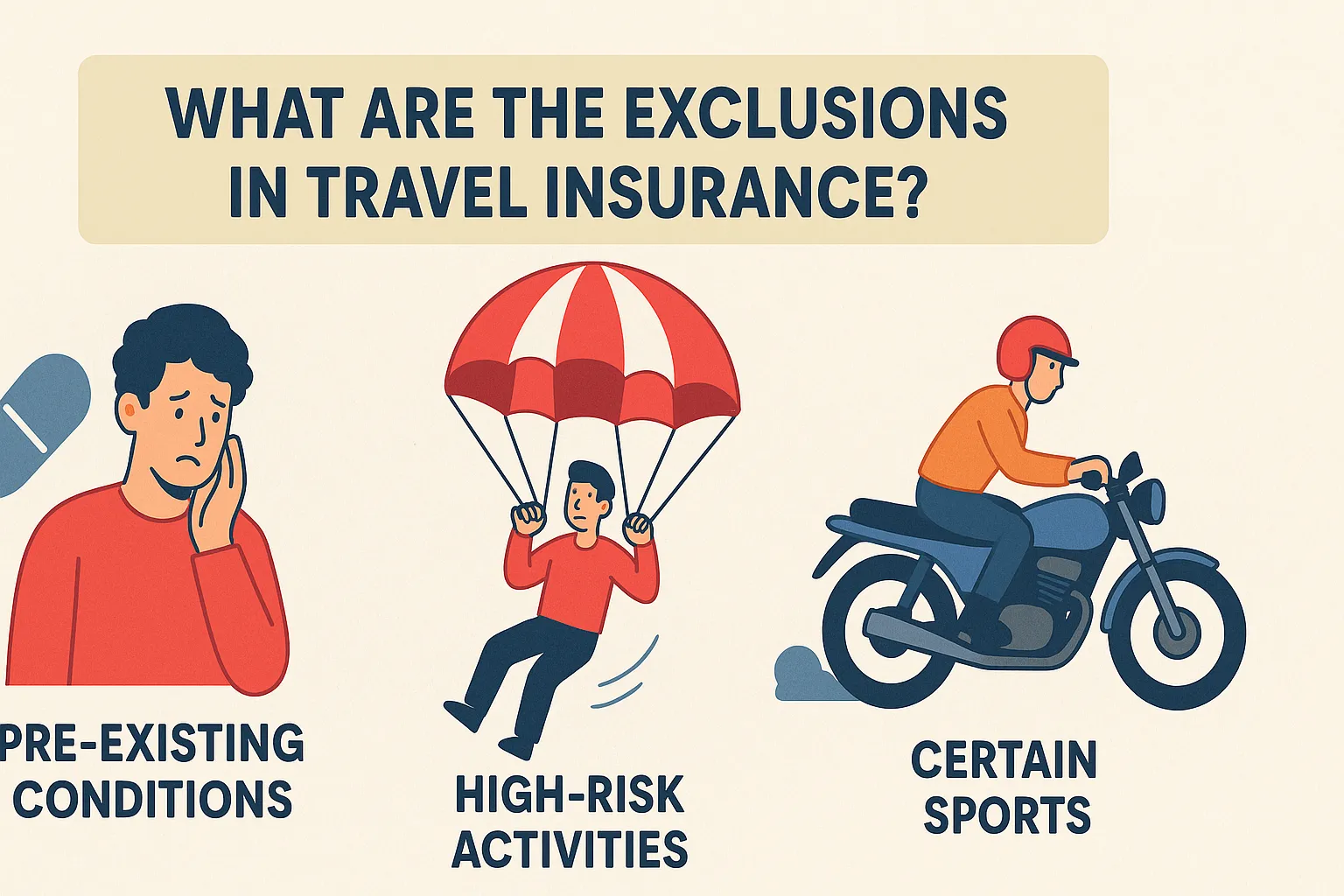
Exclusions in travel insurance refer to specific situations, activities, or conditions that are not covered by your travel policy. This means you'll need to pay out-of-pocket; common travel exclusions include pre-existing conditions (unless declared and covered), risky sports (skiing, diving), travel against government warnings, incidents under the influence of alcohol/drugs, and sometimes even loss of valuables or routine dental/medical issues, highlighting the need to read the fine print for financial protection.
This blog post clarifies the exclusions and limitations of your travel insurance policy. A clear understanding of what is not covered in a travel insurance policy will help you avoid unpleasant surprises when making a claim.
Contents

List of Travel Insurance Exclusions
There are situations where your travel insurance simply won’t step in, and they usually fit into a few main categories. Here's what to look out for:
1. Medical and Health History
These exclusions relate to health conditions that existed before purchasing the policy or conditions that arise from certain medical situations. They include:
Pre‑Existing Diseases: Any injury, illness, or complication from a pre-existing disease is not covered unless disclosed and explicitly endorsed in your policy schedule.
Pregnancy and Childbirth: Medical conditions that affect travel insurance are related to pregnancy, childbirth, or complications thereof, unless arising due to an accident.
Travel Against Medical Advice: Travelling when a doctor advises against it, when you are unfit to travel, or when you receive medical treatment.
Terminal Illness: Travelling with a terminal prognosis for any medical condition.
For example, if you have a heart condition like congestive heart failure and don’t declare it when buying your policy, the insurer won’t cover any related treatment during your trip.
2. Self-Inflicted and Risky Behaviour
These exclusions protect insurers from covering intentional or high-risk actions. They include:
Suicide or Self-Inflicted Injury: Whether medically sane or not.
Substance Abuse: Injuries or illnesses due to alcohol, drugs, intoxicants, or hallucinogens.
Illegal Acts: Injuries or losses while committing a crime or participating in riots or civil commotion.
Let's say you injure yourself while under the influence of alcohol. In this scenario, the insurer will reject your claim.
3. Dangerous Activities and Occupations
Injuries due to extreme sports or risky jobs are usually not covered by travel insurance, unless these activities are specifically listed in your plan. These include:
Adventure sports such as skydiving, mountaineering, or scuba diving.
High-risk jobs like mining, tunnelling, or dealing with explosives.
Working on specialised tasks such as aerial photography or operating heavy machinery.
If you go skydiving on holiday and get injured, your insurance won’t cover it unless the activity is explicitly included in your policy.
4. Conflict and Crisis Events
Coverage usually excludes large-scale or extreme events outside normal travel risks, such as:
War or rebellion: Including insurrection or military operations.
Terrorist or chemical attacks: Nuclear, chemical, or biological events.
Radiation exposure: Ionising radiation or radioactive contamination.
If your trip is affected by war or you need medical treatment due to a chemical attack, your travel insurance won’t cover the costs unless your policy specifically states otherwise.
5. Loss or Damage of Property
Not all property losses are covered by travel insurance. These include:
Loss of valuables, money, securities, or tickets.
Loss of eyeglasses or contact lenses.
If your camera or jewellery gets stolen during the trip, your claim will be denied unless your policy specifically covers valuables.
6. Regulatory and Legal Exclusions
These cover situations where travel insurance won’t pay because of breaches of law or government rules:
Confiscation, detention, or destruction of property by customs or other authorities.
Travelling without a valid visa for a country.
Breaching government regulations.
Your claim will not be honoured if you travel without the required visa and run into legal issues.
Common Exclusions for Sports Activities in Travel Insurance
The travel insurance sports exclusions simply mean that your insurer will not cover various risky adventure activities such as trekking, rafting, scuba diving, mountain biking, and skydiving. Below is a list of travel insurance sports exclusions, activities and risks that remain uncovered even if you opt for an adventure sports add-on with your travel insurance policy:
Sports and Activities Commonly Excluded
Adventure and High-Risk Sports: Most of the time, activities that seem to be dangerous are not included. Skydiving, bungee jumping, paragliding, and rock climbing are some of the most common ones. Scuba diving may also be prohibited beyond a designated depth, generally ranging from 30 to 40 meters.
Professional or Competitive Sports: If you get hurt while playing a professional sport, in an organised competition, in a motor race, or at an event where you get paid or sponsored, you usually will not be covered.
Organised Amateur Events: You might not be able to participate in officially organised events like marathons, triathlons, or cycling races if you do not have a specialised sports or event-specific insurance policy.
Pre-Existing Sports Injuries: Most of the time, any flare-up of an existing sports-related condition, like a chronic knee or shoulder injury, is not covered unless there is a valid pre-existing medical condition (PEC) waiver.
Training and Practice Sessions: Even if the event itself is insured, injuries that happen while training for it or getting ready for it may not be covered.
Behavioural and Safety-Based Exclusions
Coverage can be denied based on how the injury occurred, regardless of the sport itself. Some are:
Intoxication: Injuries that happen while someone is drunk, high, or using illegal drugs are never covered.
Violation of safety rules: Not wearing safety gear, or doing something without the right supervision, like diving without a license, can void coverage.
Using Uncertified Equipment: If you get hurt while using personal equipment that is not properly maintained or certified, your claims may be denied.
Making Sure You’re Covered
Exclusions in travel insurance can feel tricky, but with a bit of preparation, you can avoid unpleasant surprises. Here’s how to make sure you’re protected:
Read the Policy Carefully
Every insurance provider has slightly different exclusions. Read the fine print to learn precisely what is and isn’t covered.
Ask Questions Before Buying
If anything is unclear, contact the insurer for clarification. It’s better to ask before purchasing than to face a rejected claim later.
Disclose Pre-Existing Conditions
Always inform your provider of any pre-existing medical conditions. If coverage for these conditions is available, ensure it’s explicitly added to your policy.
Choose Add-Ons if Needed
Some insurers offer optional coverage to bypass specific exclusions, such as 'Cancel for Any Reason'. Evaluate whether these add-ons make sense for your trip.
Keep Documentation Ready
For travel insurance claims documents, you’ll need evidence such as medical reports, police reports, or booking confirmations. Having them ready can streamline the process.
Stay Informed
Pay attention to travel advisories, weather alerts, and health warnings. Travelling against official advice can void your coverage, so staying informed is key.
Following these steps ensures your trip remains worry-free and your international travel insurance works exactly as intended.
Why Exclusions in Travel Insurance Are Necessary?
Exclusions seem like a limitation, but they exist for a reason. They help:
Keep premiums affordable for everyone.
Prevent misuse of insurance.
Ensure the policy focuses on covering the most common travel risks.
Final Thoughts
Exclusions in travel insurance might sound like fine print you can skip, but they are essential to understanding your coverage. They set the boundaries of what your travel policy covers and what it doesn’t cover. Knowing them helps you travel smarter, avoid unexpected costs, and make confident decisions if something goes wrong.
Before you buy a policy, take the time to read the details, ask questions, and be clear about what is and isn’t covered. Preparation goes a long way toward making your trip a worry‑free experience. Travel safe, travel informed, and enjoy every moment of your journey.
Frequently Asked Questions (FAQs)
Are exclusions the same for all travel insurance policies?

No. Exclusions vary by insurer and policy type. Always check your specific policy document.
Can exclusions be removed from a policy?
Some exclusions can be waived if you purchase additional coverage or endorsements. It depends on the insurer and the policy terms.
Does declaring a pre-existing condition remove exclusions?
It can, but only if the insurer specifically endorses the condition in the policy schedule.
Are high-risk activities covered automatically?
No. Most travel insurance policies exclude hazardous activities unless explicitly included.
Will exclusions apply to both domestic and international travel insurance?
Yes. Both types of travel insurance have exclusions, though some specifics may differ.
What kind of Risks in adventure sports does travel insurance cover?
In adventure sports insurance cover, claims commonly arise due to these reasons, like faulty equipment, ignorance of safety measures from the professional’s side, and inadequate training.
What are the common injuries caused in adventure sports?
Adventure sports commonly result in injuries such as muscle sprains or strains, impact-related injuries, fractures, muscle tears, and injuries caused by unexpected natural events or disasters.
Disclaimer: The content on this page is generic and shared only for informational and explanatory purposes. It is based on several secondary sources on the internet, and is subject to changes. Please check the policy document for cancellation reasons, and terms and conditions of the policy.
Travel Insurance for Popular Destinations

Was this article helpful?

Recent
Articles
Pure Term Insurance vs Money Back Policy: Which Is Better in India?
Neviya Laishram Jan 14, 2026
Is ULIP Really Worth It?
Neviya Laishram Jan 14, 2026
Should I Rely Only on Employer Group Term Insurance or Buy a Pure Term Plan?
Neviya Laishram Jan 14, 2026
What Does ‘Pure Term Insurance’ Really Mean for Your Loved Ones?
Neviya Laishram Jan 14, 2026
Why Life Insurance Isn’t Meant to Be an Investment
Neviya Laishram Jan 14, 2026
All Articles


Want to post any comments?

Ensure a safe trip with a comprehensive travel insurance plan.
Travel insurance plans starting @ ₹45*/per day

Get Quote


#36/5, Hustlehub One East, Somasandrapalya 27th Main Rd, Sector 2, HSR Layout, Bengaluru, Karnataka 560102